Foxgloves Grips Foxgloves WorksShowa Opti Grip 340Showa Floreo 370Showa Thermo 451Showa Thornmaster 350RThorn Protector GauntletsBionic Gauntlet - RoseSkytec Thermal Glove
Marking Systems
Shop Links About us AccountsTerms
Al Fresco LivingTies & StringToolsRaised BedsFruit and Veg CagesNetting and FleeceOdds & SodsClearance Gift SetsWatering
Copper LabelsAluminium LabelsZinc Labels
Convert EUR(€)

Decorative Tin Plates

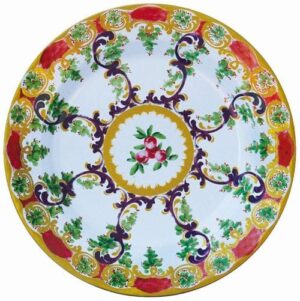
“Designed in the UK, but nowadays probably manufactured elsewhere, these beautiful “tin”  (in reality steel with an over-printed design) plates are ideal for your posh or not quite so posh picnics.  So whether your taste is Glyndebourne or Henley, or the local beach or park these plates make fantastic re-usable and un-breakable picnic plates that are bound to set tongues wagging. Robust yet light and washable (if in a dishwasher on a gentle programme) and when the conversation flags can even be used as a kind of Frisbee!

Alternatively if Al Fresco dining is not your biscuit then the plates are great for finger foods or simply as decoration. Until picked up, most people would not know these are not the original porcelain plates as used in some of the great British houses of centuries ago.”

All the plates are identically sized with a diameter of 10 inches/25.4 cms.

The Fitzwilliam Museum – Isnik Plate The Metropolitan Museum of Art – William Morris, Daffodils Plate Victoria and Albert Museum - The Blue Fruit Plate

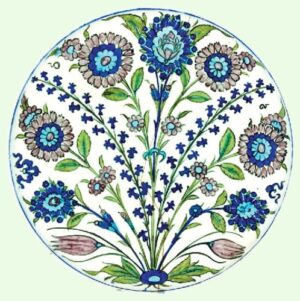
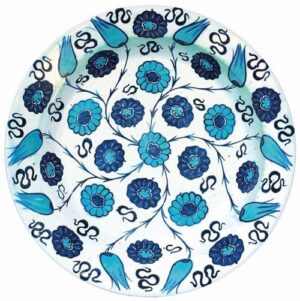
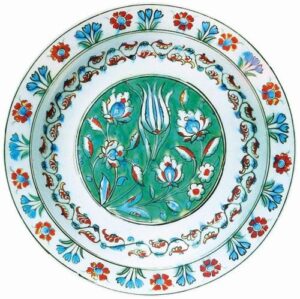
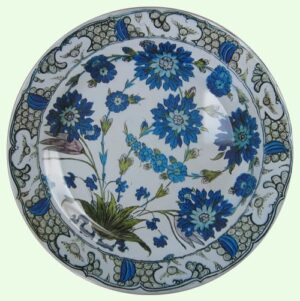
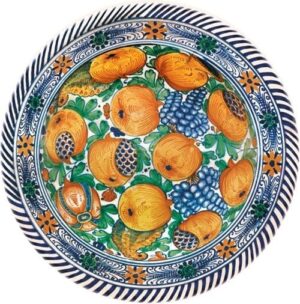
The Fitzwilliam Museum – Isnik Plate

Isnik pottery of the Ottoman period was among the most colourful ever made. This plate is a reproduction of a fritware dish, thinly covered with white slip, and painted under a clear glaze. The brilliant palette, exuberant stems of flowers springing from a central point near the rim and breaking wave border are typical of Isnik designs of about 1550.

This plate originally produced for the Fitzwilliam Museum, Cambridge, Great Britain

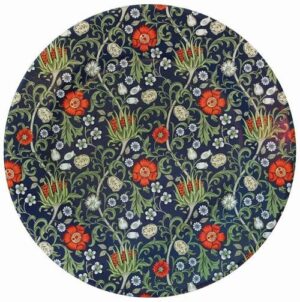
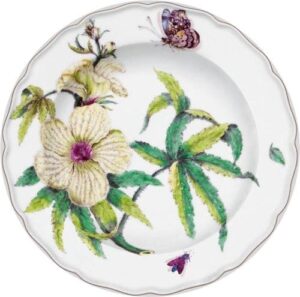
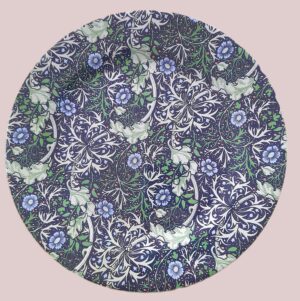
The Metropolitan Museum of Art – William Morris, Daffodils Plate

This pattern called Daffodil taken from a wallpaper designed for Morris and Co by John Henry Dearle circa 1895.

This design produced for the Metropolitan Museum of Art, New York, USA in cooperation with the Huntington Library, Art Collections and Botanical Gardens, San Marino, California, USA

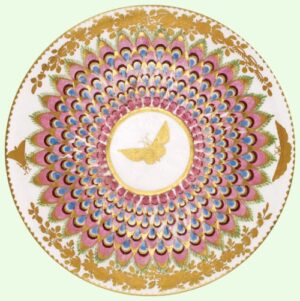
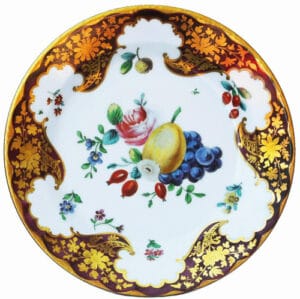
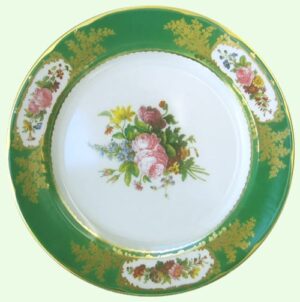
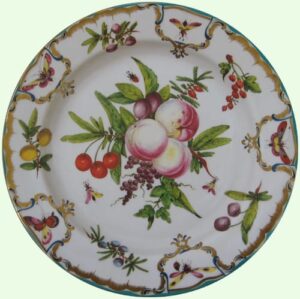
Victoria and Albert Museum - The Blue Fruit Plate

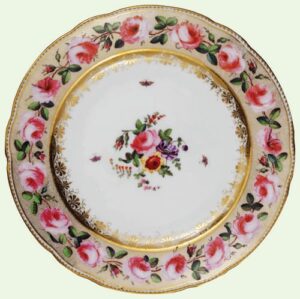
This design is taken from a Derby porcelain plate with painted decoration and gilding dating from 1825-1840.

The fruit and flowers painters of the Derby factory were important leaders of fashion in the area of painted decoration on porcelain during the early 19th century.

This plate was produced for the Victoria & Albert Museum, London

Victoria and Albert Museum – Bouquet of Flowers Plate The Royal Collection – The Victoria and Albert Plate The Wallace Collection – The Daisy Centre Plate

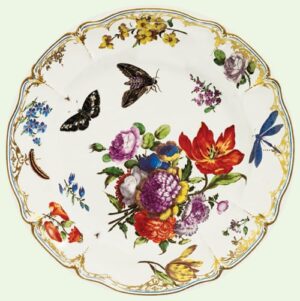
Victoria and Albert Museum – Bouquet of Flowers Plate

This design is taken from a Staffordshire porcelain plate with painted decoration, dating from 1810-1820.

Many Staffordshire wares, including this plate, were decorated outside the factories, often in London where they were sold.  This practice declined in the 1840’s when the Staffordshire factories began to dominate the ceramic industry.

This plate produced for the Victoria & Albert Museum, London.

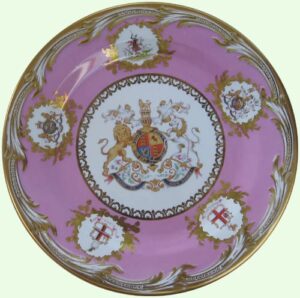
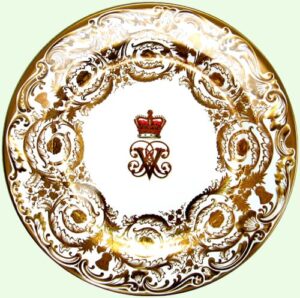
The Royal Collection – The Victoria and Albert Plate

Made c. 1840 this Worcester plate is painted at the centre with the cipher of Queen Victoria and Prince Albert. It was given to Queen Mary in 1934.

©2008 H.M. QUEEN ELIZABETH II

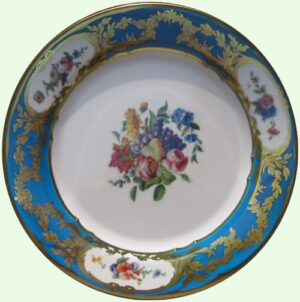
The Wallace Collection – The Daisy Centre Plate

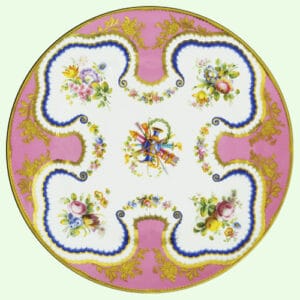
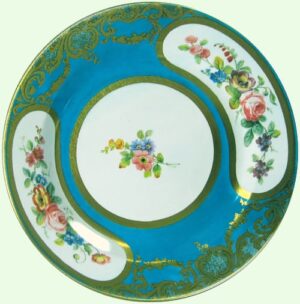
This design is taken from a Sèvres Porcelain saucer dated 1766 (C439). The cup and saucer set (Gobelet ‘à lait’ et soucoupe) were purchased by the 3rd Marquess of Hertford and recorded in an inventory of 1842.

This design produced for the Wallace Collection, London – Great Britain

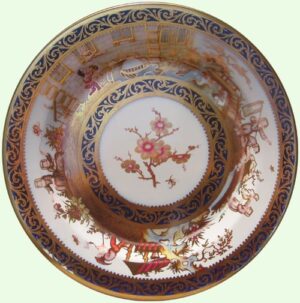
The Wallace Collection – Garland of Roses Plate The Royal Collection – The Chinese Plate The Metropolitan Museum of Art – Rosebuds Plate

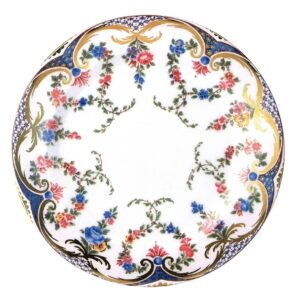
The Wallace Collection – Garland of Roses Plate

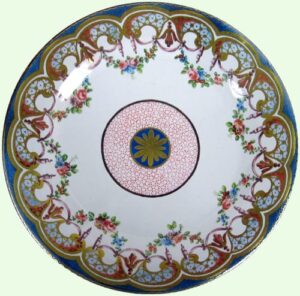
This design is taken from a Sèvres Porcelain saucer dated 1760 (C344). The decoration consists of a scalloped border, suspended from which are painted garlands of roses, cornflowers and pansies interlaced in pairs to form heart shapes. The cup and matching saucer were probably acquired by the 3rd Marquess of Hertford (1777-1842).

This design produced for the Wallace Collection, London – Great Britain

The Royal Collection – The Chinese Plate

The unusual Gothic-cum-Chinese scenes of this plate are taken from an outstanding Sèvres cup and saucer (goblet litron) dating from 1778/79 which is the only known example of its kind. The scenes may derive from illustrations of a popular novel, poem or play of the time.

©2008 H.M. QUEEN ELIZABETH II

The Metropolitan Museum of Art – Rosebuds Plate

This design is taken from a French plate made at the Sèvres Porcelain factory in 1771. The original plate was decorated in enamel by Jean Nicolas Le Bell (1765-93).

This plate produced for the Metropolitan Museum of Art, New York

The Royal Collection – The William IV Plate The Wallace Collection – Three Garlands Plate The Royal Collection – The Manchester Plate

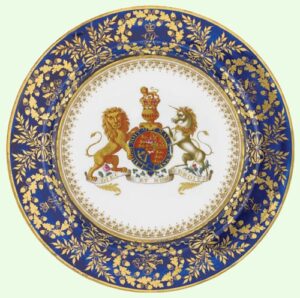
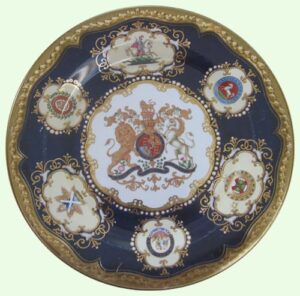
The Royal Collection – The William IV Plate

Commissioned by William IV in 1830, this service by Worcester was completed in time to be used on 10th may 1833 at a banquet given for the Duc d’Orleans.

The surrounding border is painted with the insignia of the British orders of chivalry.

©2005 H.M. QUEEN ELIZABETH II

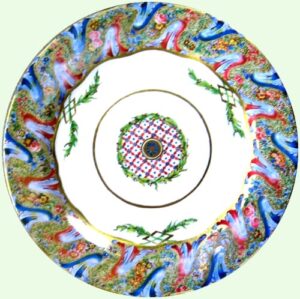
The Wallace Collection – Three Garlands Plate

This design is taken from a Sèvres Porcelain saucer dated 1766 (C438) and shows a ground pattern invented by the porcelain painter Vincent Taillandier (1736–90)

This plate was produced was for the Wallace Collection, London.


The Royal Collection – The Manchester Plate

This plate is from a Sèvres service given as a diplomatic gift by King Louis XVI of France to the Duchess of Manchester, the wife of the British Ambassador to the court of Versailles. The occasion was the signature of the Treaty of Versailles which brought an end to the War of American Independence. The service was acquired by King George IV in 1802.

©2008 H.M. QUEEN ELIZABETH II

The Royal Collection – The Great Exhibition Plate The Royal Collection – The Duke and Duchess of York Plate The Royal Collection – The Royal Oak Plate

The Royal Collection – The Great Exhibition Plate

This design is from a dessert service by Coalport. The service was used at the Royal Table at the banquet given by the City of London at the Guildhall to celebrate the opening of The Great Exhibition, 9th July 1851.

©2005 H.M. QUEEN ELIZABETH II

The Royal Collection – The Duke and Duchess of York Plate

Made c.1820, for William IV, when Duke of Clarence, part of this service was presented as a wedding gift to The Duke and Duchess of York (later King George V and Queen Mary) by the Royal Warrant holders in 1883.

The border bears the Garter motto; "Honi Soit Qui Mal y Pense", which translates as "Evil Be Unto Him Who Evil Thinks".

©2005 H.M. QUEEN ELIZABETH II

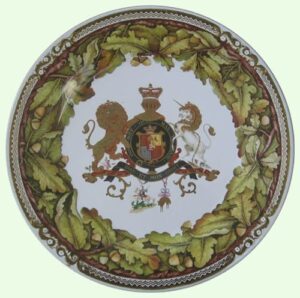
The Royal Collection – The Royal Oak Plate

Painted with The Royal Arms with the Great George and the badge of the Golden Fleece, this plate was probably made as a trial piece for the Rockingham Coronation Service c.1830.

©2005 H.M. QUEEN ELIZABETH II

The Metropolitan Museum of Art – The Duke of Gloucester Plate The Royal Collection – The Rockingham Plate The Metropolitan Museum of Art – Tobacco Leaf Plate

The Metropolitan Museum of Art – The Duke of Gloucester Plate

This design called the “Duke of Gloucester” Pattern is taken from an English Worcester soup plate made about 1780.

This plate produced for the Metropolitan Museum of Art, New York

The Royal Collection – The Rockingham Plate

Considered the most sumptuous product of the Rockingham works, this service which was originally commissioned for William IV’s Coronation in 1830, was first used at Queen Victoria’s Coronation banquet eight years later.

©2005 H.M. QUEEN ELIZABETH II


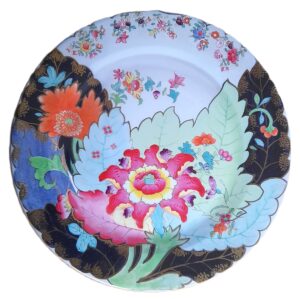
The Metropolitan Museum of Art – Tobacco Leaf Plate

This design, referred to as the “Tobacco Leaf” pattern, is adapted from a late 18th – early 19th century Chinese Vase in the Metropolitan Museum’s collection. The original beaker-shaped vase was made in China for the European Market.  It is made of hard paste porcelain and is decorated with enamel colours in a variant of the tobacco leaf or passion flower design.

This plate produced for the Metropolitan Museum of Art, New York.

The Royal Collection – The Arabesque Plate The Royal Collection – The Madame du Barry Plate Devonshire Collection, Chatsworth, Derbyshire – The Gold Edge Plate

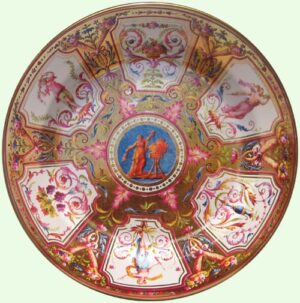
The Royal Collection – The Arabesque Plate

This exceptional plate design is taken from a Sèvres cup and saucer (goblet litron) dating from 1786. Painted on a rich gold ground, the colourful arabesques and dancing classical figures, which were inspired by Raphael’s loggia decorations in the Vatican, recall the Sèvres dinner service commissioned by Louis XVI of France in 1782.

©2008 H.M. QUEEN ELIZABETH II

The Royal Collection – The Madame du Barry Plate

This plate reproduces one of twelve produced at Sèvres, acquired by George IV.  This once formed part of a dinner service purchased in 1770 by Madame du Barry, the mistress of King Louis XV of France. The decoration is based around the themes of Love, the Seasons, the Elements and the Arts.

©2008 H.M. QUEEN ELIZABETH II

Devonshire Collection, Chatsworth, Derbyshire – The Gold Edge Plate

This design is taken from a Victorian porcelain plate, c.1870. It is one of a dessert service used by the Duke and Duchess of Devonshire at Chatsworth


Price Each: £4.95

Choose Item & Quantity


Gift-Wrap Service


Product Search

Shapes at a Glance
Colour Chart & Prices
Shopping Cart